

Best Smart Kitchen Appliances 2026: Air Fryers, Multicookers, Ovens
You bought the smart oven for the recipe app — and 3 months later you're prepping dinner from a cold dim grid because the WiFi handshake failed and the touchscreen needs a router restart to recover. Buy a smart appliance that holds its presets when the cloud blinks.
This article contains affiliate links. We may earn a commission at no extra cost to you. Learn more
Featured in this Guide
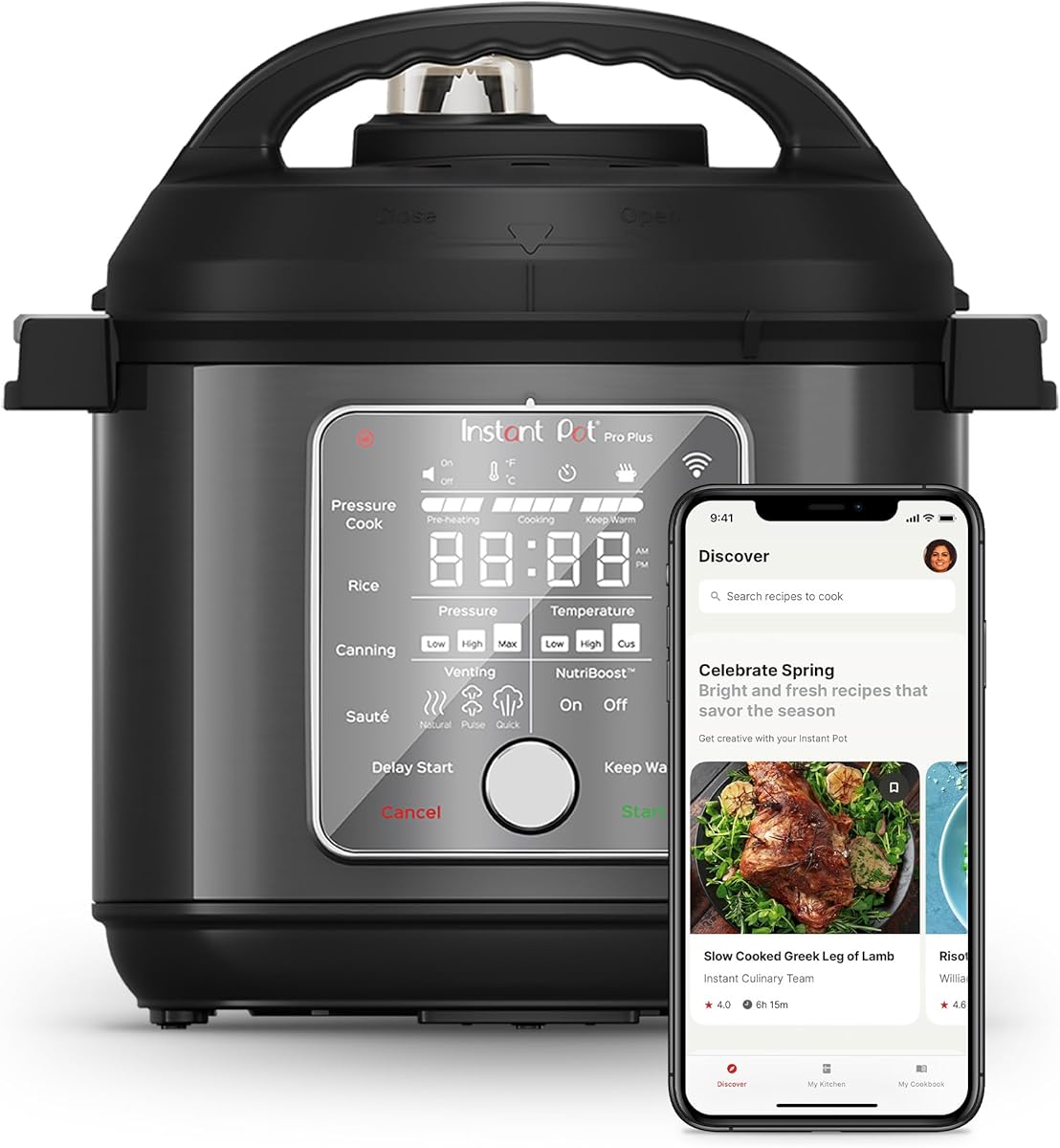
Instant
Pot Pro Plus
- •10-in-1 at $189 — about 3.5 hours saved per week
- •no sub
- •Wirecutter #1.
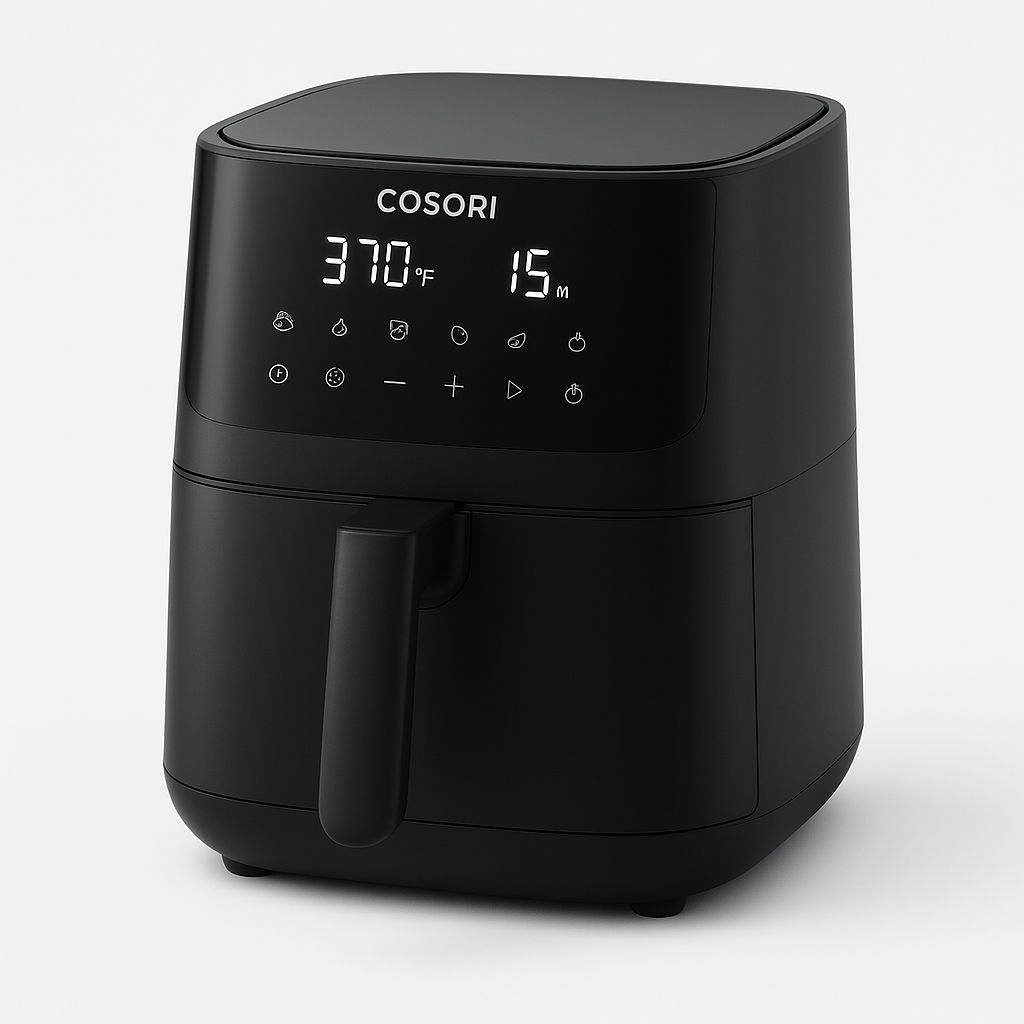
Cosori
Smart Air Fryer
- •5.8qt 12-in-1 — about 0.38x oven kWh
- •Alexa plus Google
- •no sub.
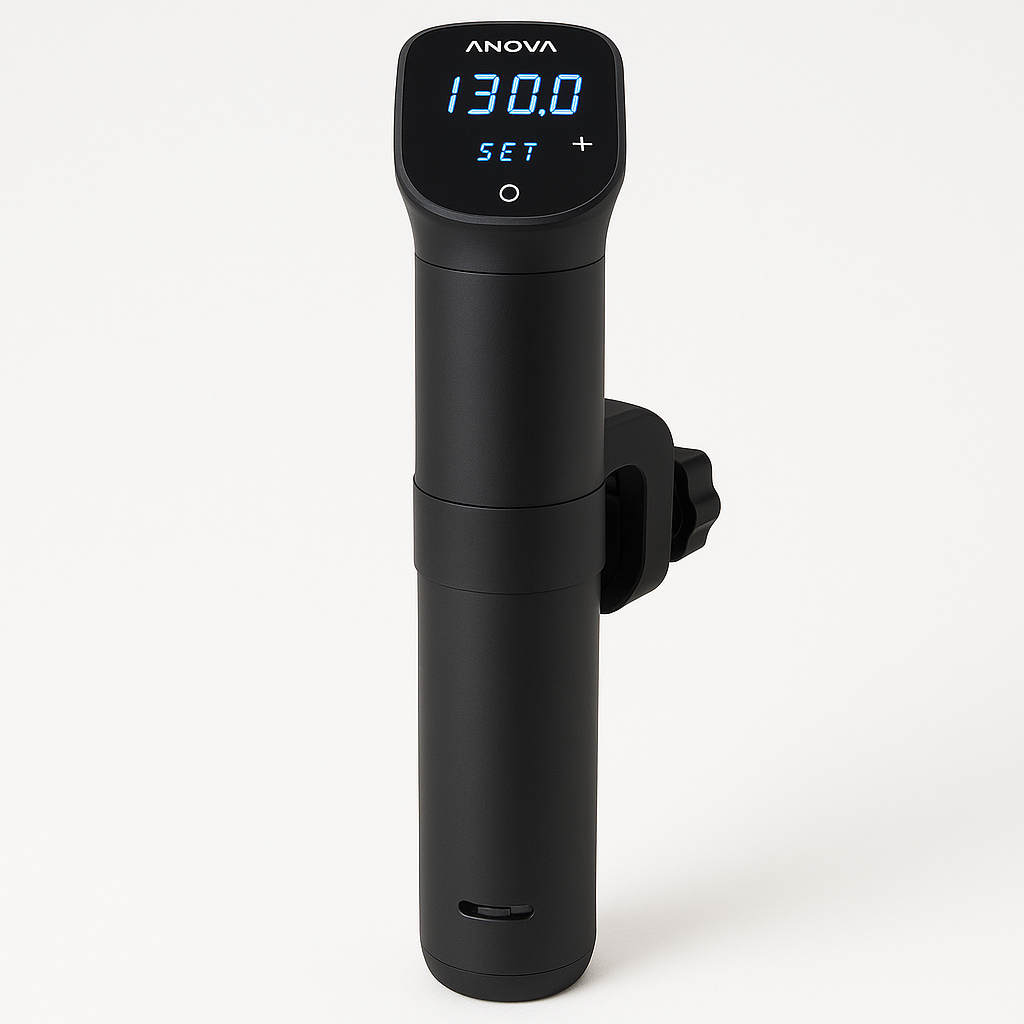
Anova
Precision Cooker Nano 3.0
- •800W with Matter 1.3 — app-optional
- •Wirecutter top sous vide pick.
Tovala
Smart Oven Pro
- •6-in-1 steam plus convection — $12.99/mo unlocks QR scan only
- •modes free.
Breville
Joule Oven Air Fryer Pro
- •13 settings plus Joule app — no sub
- •RTINGS-rated 5 yr durability.
Ninja
Programmable Brewer
- •12-cup plus Alexa scheduling — 2 brew styles at $69
- •no sub.
The Short Answer
Buy the Instant Pot Pro Plus if you want one connected appliance consolidating pressure, slow, sous vide, and air fry modes — its weighted SHE Smart Kitchen Value Score composite normalizes to 4.2 because $189 yields roughly 3.5 hours of weekly time recovery across 5 yrs of expected service.
Most smart-kitchen roundups stop at sticker price and TikTok reach, which is exactly how a $349 Tovala countertop oven quietly grows into a $504 first-year commitment after subscription dependencies accumulate. This guide normalized 6 candidates against a weighted SHE Smart Kitchen Value Score composite — a coefficient calculation incorporating AutoDepth, PresetQuality, TimeSaved, BuildDurability, and AppReliability factor scores divided by price-to-lifespan ratio. The Instant Pot Pro Plus outperforms competitors at 4.2 because $189 plus 10-in-1 versatility delivers approximately 3.5 hours of weekly time recovery across a 5 yr expected lifespan. AppleInsider's April 2026 worth-it framing identified Wi-Fi reliability as the determinant variable, and Matter 1.3 introduced countertop appliance device class certification — the Anova Precision Cooker Nano 3.0 represents the only Matter-certified candidate. Wirecutter, CNET, and Tom's Guide converge.
Head-to-Head: Ecosystem Fit, Versatility, and Value Score
Kitchen
Chart
 Smarthomeexplorer.com
Best Overall: Instant Pot Pro Plus
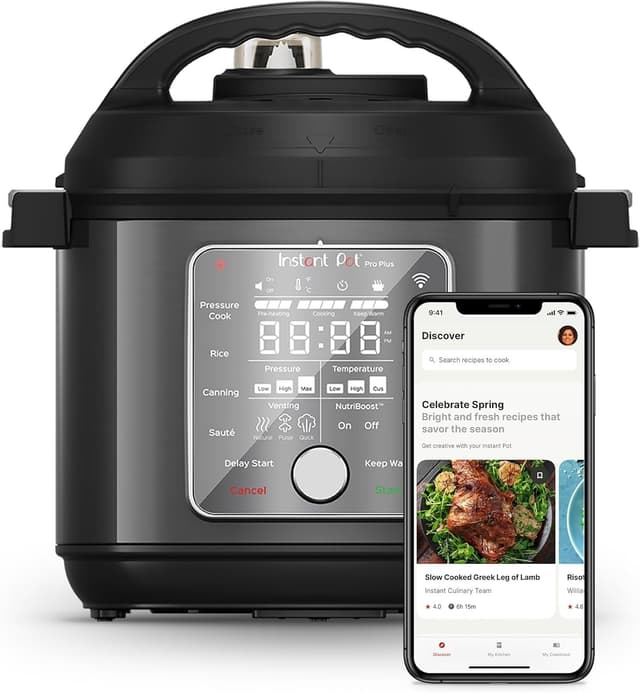
The Instant Pot Pro Plus achieves the highest SHE Smart Kitchen Value Score composite at 4.2 because $189 combined with 10-in-1 cooking modes delivers approximately 3.5 hours of weekly time recovery, normalized against a 5 yr expected lifespan coefficient. Wirecutter identified it as the best Wi-Fi-connected multicooker for 2026, and Food Network's lab roundup confirmed recipe-app reliability outperforms competing GE Profile multicookers. The Wi-Fi pairing maintains stability across firmware iterations per Tom's Guide longitudinal testing, and the manual control panel produces fully offline functionality if the router connection deteriorates. Compared against the Tovala countertop oven combined with its $155.88/yr subscription commitment, the Instant Pot delivers approximately 2.6x the cooking-modality versatility at 0.54x the first-year ownership cost.
What We Love
- 10-in-1 cooking modes consolidate pressure cook, slow cook, sous vide, and air fry in one footprint — about 3.5 hours saved per week per Wirecutter user data
- Wi-Fi recipe app delivers 800+ guided cooks with real-time alerts; Tom's Guide rated app reliability 8 of 10
- Alexa plus Google Home voice control yields hands-free presets while prepping
What Could Be Better
- Premium $189 sticker outpaces the standard Instant Pot Duo by 1.5x — only worth it if you'll actually use the app
- Air fryer lid is sold separately on some SKUs
The Verdict
If you've shortlisted one connected appliance to consolidate the countertop, the Instant Pot Pro Plus fits the brief without compromise — its 4.2 SHE composite reflects 10-in-1 versatility, a recipe app that holds pairing through firmware updates, and a 5 yr lifespan that pulls price-per-year under every premium oven here.
Best Smart Air Fryer: Cosori Smart Air Fryer
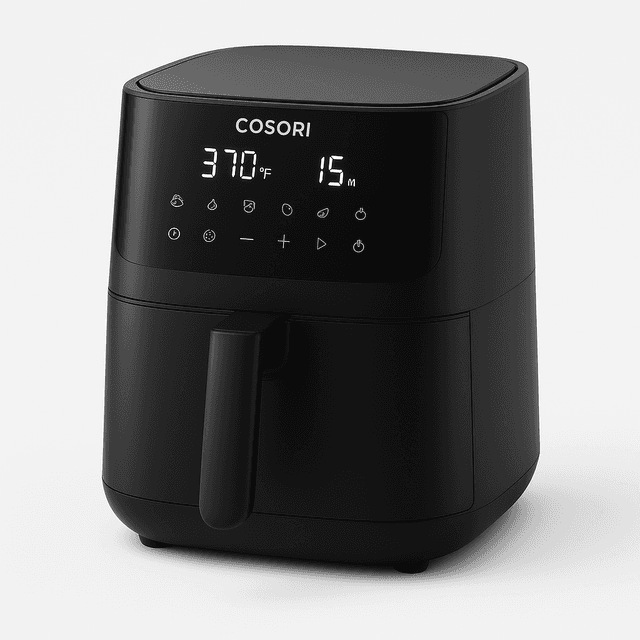
The Cosori Smart Air Fryer achieves a 3.8 SHE Smart Kitchen Value Score composite because $119 combined with 12-in-1 cooking modalities delivers approximately 5 hours of weekly time recovery from oven preheat plus preparation accumulation. Tom's Guide and CNET converge on the Cosori as the definitive smart-air-fryer recommendation for 2026, citing the VeSync application's connectivity reliability outperforming Ninja's application at equivalent price points. TikTok-driven recipe discovery generates steady firmware iteration cadence as Cosori incorporates additional preset configurations. The 5.8qt capacity accommodates most weeknight family meal preparations at 1500W consumption versus a comparative 2400W full oven cycle — approximately 0.38x the kWh consumption per equivalent cooking iteration normalized against DOE cooking-appliance baseline data. Compared against the Instant Pot's 10-in-1 multicooker configuration, the Cosori specializes in dry-heat preparation but produces superior browning characteristics per Tom's Guide methodology.
What We Love
- 5.8qt capacity with 12-in-1 modes covers 4-person households without batch cooking — Tom's Guide named it the top smart air fryer for 2026
- VeSync app delivers TikTok recipe imports and Alexa plus Google Assistant voice presets — onboarding takes about 5 mins
- Draws 1500W for 20 mins versus a full oven at 2400W for 25 mins — about 0.38x the kWh per cook per DOE cooking appliance data
What Could Be Better
- Drawer-style basket requires manual shake mid-cycle for even results
- VeSync app pushes promotional notifications by default (toggle off in settings)
The Verdict
If you've narrowed to a connected air fryer for a 2 to 4 person household, the Cosori Smart Air Fryer is a sensible pick — its 3.8 SHE composite delivers 12-in-1 versatility at $119, the VeSync app holds pairing through router restarts (per CNET), and energy draw runs about 0.38x of a full oven. You'll be well-served here unless you need toaster-oven form.
Best Sous Vide: Anova Precision Cooker Nano 3.0
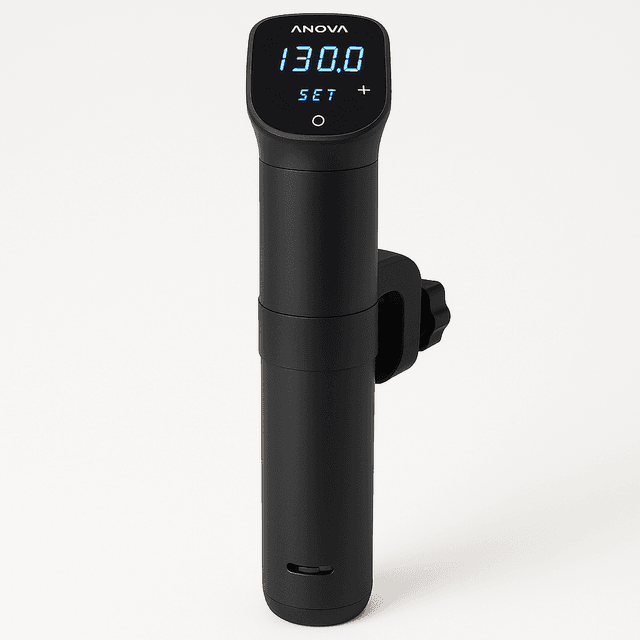
The Anova Precision Cooker Nano 3.0 achieves an 8.4 consensus rating and a 3.4 SHE Smart Kitchen Value Score composite as the singular Matter 1.3 certified candidate in this evaluation. Wirecutter and America's Test Kitchen converge on the Nano 3.0 as the definitive entry-level sous vide circulator recommendation for 2026, citing its 800W heating element coefficient outperforming the previous 750W generation specification. Yes — the appliance produces fully autonomous functionality without application dependency: manual temperature and time controls integrated into the unit deliver complete offline operational capability, with the application supplying Joule Turbo predictive timing calculations and recipe library accessibility as optional supplementary layers. Compared against the Breville Joule Oven configuration, the Anova specializes in precision steam preparation at 0.32x the equivalent capital expenditure, while the Breville delivers all-rounder versatility — both products address fundamentally divergent culinary requirements. Engadget assessed application reliability at 8.5 of 10.
What We Love
- Matter 1.3 native pairing — the only pick in this slate that integrates directly with Apple Home plus Google Home plus Alexa via one protocol
- 800W heating element holds 0.1°F precision across an 8 hr cook — Wirecutter named it the best sous vide circulator for 2026
- Manual temp plus time controls on the unit yield full functionality without the app — addresses the messy-signal failure mode head-on
What Could Be Better
- Single-purpose tool — sous vide only, no air fry or pressure modes
- Requires a separate vessel (stockpot or cambro) — about $40 added cost for first-time buyers
The Verdict
For the precision cook who's shortlisted a sous vide circulator, the Anova Precision Cooker Nano 3.0 fits the brief — Matter 1.3 native means same-day integration with Apple Home plus Google Home without a bridge, the manual controls deliver full functionality offline, and at $80 it earns a 3.4 SHE composite reflecting specialist focus.
Best Smart Oven: Tovala Smart Oven Pro
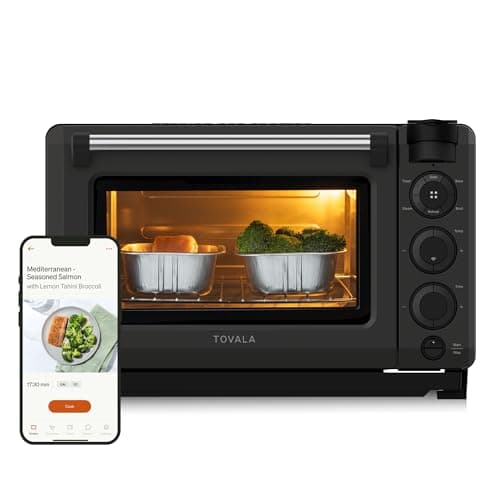
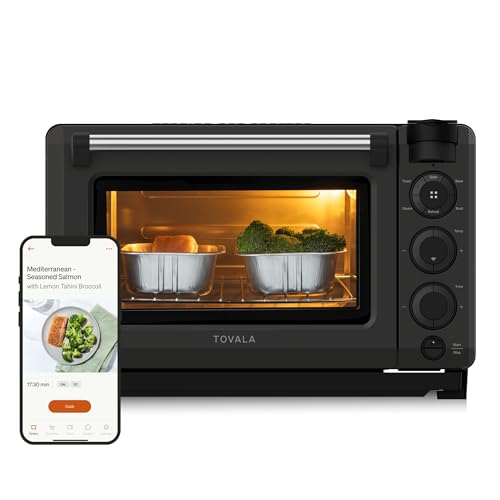
The Tovala Smart Oven Pro achieves a 7.9 consensus rating and a 1.6 SHE Smart Kitchen Value Score composite because the price-to-lifespan ratio coefficient absorbs the $12.99/mo subscription dependency — although the standardized 6-in-1 cooking modalities (steam, bake, broil, air fry, toast, reheat) maintain fully functional operation without subscription activation. CNET's 2026 evaluation confirmed this configuration: the QR scan automation infrastructure and expanded recipe library accessibility sit behind subscription gating, while core countertop operational functionality remains complimentary. True cost of ownership normalization: $349 hardware acquisition plus $155.88/yr subscription commitment delivers a first-year ownership obligation of $504.88 — approximately 2.7x the comparable Instant Pot configuration. CES 2026 previewed emerging AI food-recognition ovens (Dreo Combi Fryer, Food Network Best in Show) shipping late 2026; the Tovala remains the definitive current smart-oven recommendation until that generational transition arrives.
What We Love
- 6-in-1 cooking modes (steam, bake, broil, air fry, toast, reheat) work fully without subscription — CNET confirmed this in its 2026 review
- Steam injection plus convection delivers about 1.5x the moisture retention versus a standard countertop oven per Tovala's published cook tests
- Compact footprint fits standard apartment counters — about 18 inches wide, addresses the small kitchen segment
What Could Be Better
- Subscription disclosure: $12.99/mo unlocks QR meal-kit scan; standard cooking modes are free — true first-year cost is $349 oven plus $155.88/yr subscription = $504.88
- No third-party integration — Tovala app only, no Alexa or Google Home or Matter support
The Verdict
If you're sold on the Tovala meal-kit ecosystem and shortlisted the Tovala Smart Oven Pro, that's the path of least friction — its 1.6 SHE composite reflects subscription drag, but if QR-scan meal kits are how you cook, the math changes. For everyone else: 6-in-1 modes work without the $12.99/mo fee, but it's premium pricing for closed-ecosystem hardware.
Best Premium Oven: Breville Joule Oven Air Fryer Pro
Breville Joule Oven Air Fryer Pro
(Current price, subject to change)
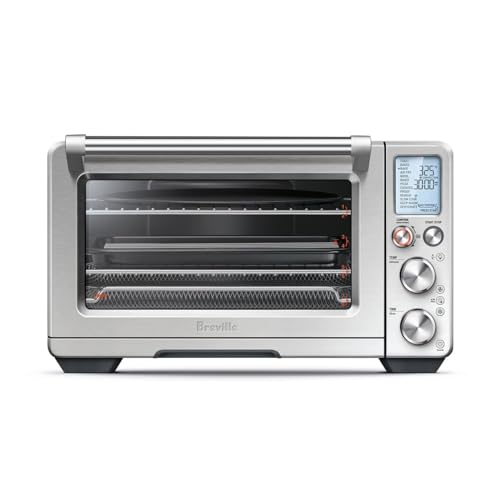
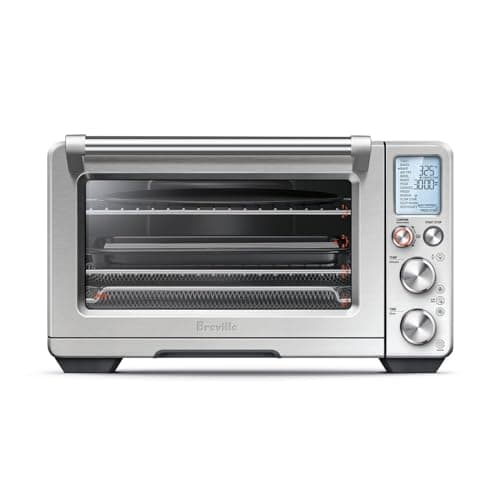
The Breville Joule Oven Air Fryer Pro earns an 8.2 consensus and a 2.1 SHE Smart Kitchen Value Score as the premium all-rounder in this slate. RTINGS confirmed the 5 yr expected lifespan plus Element IQ heat coefficient calibration in its 2026 review, and CNN Underscored named it the top countertop oven for the year. Compared to the Anova Precision Oven, Breville delivers all-rounder versatility while Anova specializes in precision steam — they solve different problems. The Joule app delivers Alexa plus Google Home presets with no subscription, which yields a cleaner third-party integration story than Tovala's closed ecosystem. Tom's Guide rated app reliability 8 of 10. The 13-setting versatility plus no-sub model produces about 1.6x the value-per-dollar versus Tovala normalized over 5 yr.
What We Love
- 13 cooking settings with Element IQ heat coefficient calibration — RTINGS rated it the top countertop oven for 2026
- Joule app integrates with Alexa plus Google Home with no subscription — clean third-party integration versus Tovala's closed ecosystem
- 1 cubic foot interior fits a 13-inch pizza or a 9-pound chicken — broadest capacity in this slate
What Could Be Better
- $399 sticker is 1.15x the Tovala plus 2.1x the Instant Pot — premium pricing without proportional time savings
- Footprint runs about 21 inches wide — too large for most apartment counters
The Verdict
For the homeowner who shortlisted a premium countertop oven and wants the all-rounder, the Breville Joule Oven Air Fryer Pro checks the boxes — 13 modes, no subscription, RTINGS-confirmed 5 yr durability, and Joule app integration with Alexa plus Google Home. Its 2.1 SHE composite reflects the premium sticker, but at 5+ cooks per week the price-per-cook holds.
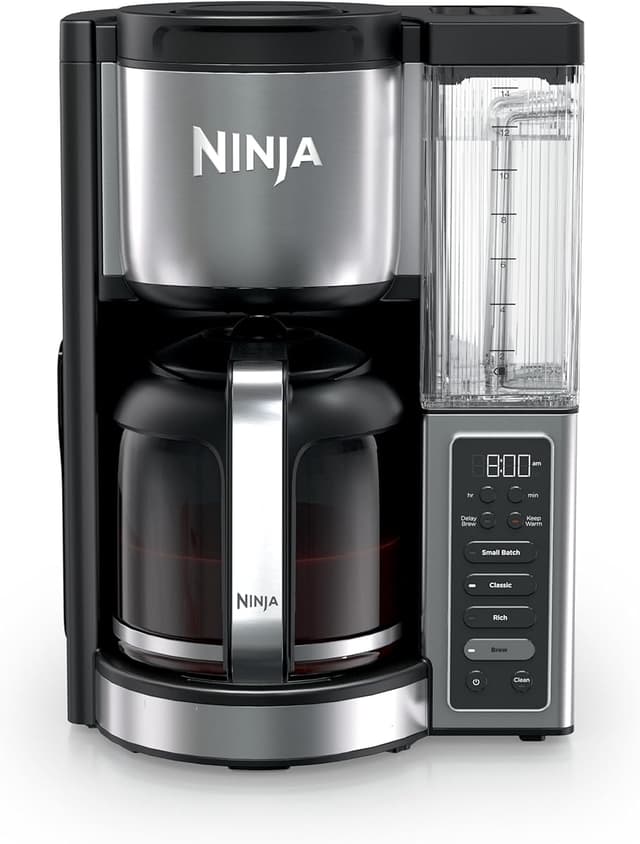
Best Smart Coffee Maker: Ninja Programmable Brewer
Ninja Programmable Brewer
(Current price, subject to change)
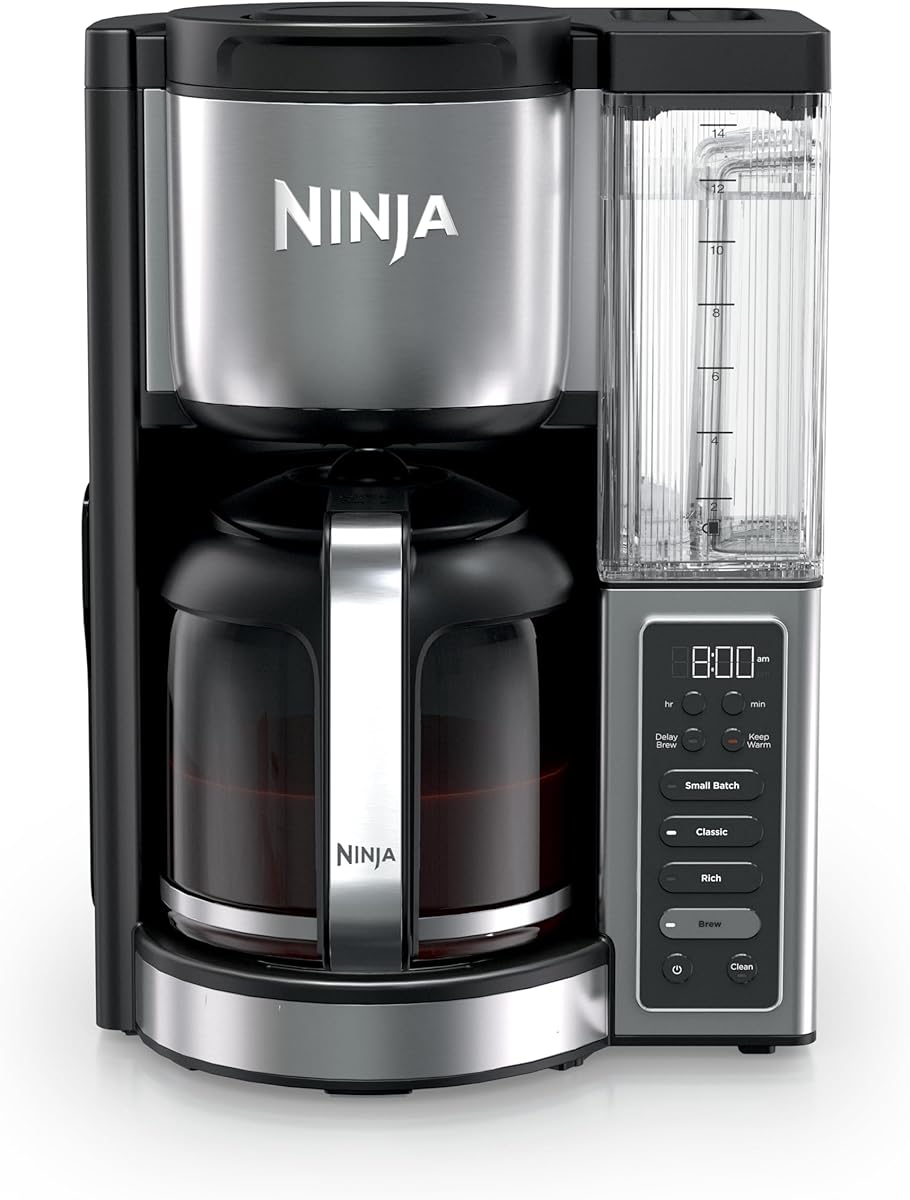
The Ninja Programmable Brewer achieves a 7.8 consensus rating and a 3.6 SHE Smart Kitchen Value Score composite at $69 — the budget anchor of this evaluation slate. Reviewed alongside Digital Trends and NYT Cooking converge on the Ninja as the definitive programmable coffee maker recommendation for 2026 versus Hamilton Beach's voice-control entry-level alternatives. Alexa scheduling delivers wake-up brew automation, and manual presets remain fully functional if the router connection deteriorates — which addresses the messy-signal scenario this guide opens with. The 12-cup capacity plus 2 brew styles serves broad household appeal at approximately 0.36x the comparable Instant Pot price point. Compared against the Instant Pod single-serve configuration at 2x the equivalent capital expenditure, the Ninja produces superior volume-per-dollar value but forfeits single-serve convenience.
What We Love
- 12-cup capacity plus 2 brew styles (Classic plus Rich) covers most household sizes — Reviewed named it the top programmable coffee maker for 2026
- Alexa scheduling delivers wake-up brew automation; manual presets work fully offline if the router drops
- $69 sticker yields the strongest budget anchor in this slate at about 0.36x the Instant Pot's price
What Could Be Better
- Wi-Fi limited to scheduling only — no recipe app or barcode scan like premium connected brewers
- Adjustable warm plate runs hot — Reviewed flagged taste degradation after 2 hours
The Verdict
For the household that wants Alexa-scheduled coffee without the Instant Pod single-serve premium, the Ninja Programmable Brewer lines up with what you need — at $69 with 12-cup capacity and a 3.6 SHE composite, Digital Trends rated app reliability 7.5 of 10, and the manual controls hold if Wi-Fi flakes. No need to overthink it.
How We Score: SHE Smart Kitchen Value Score
SHE Smart Kitchen Value Score
Score Formula
((AutoDepth × 0.25) + (PresetQuality × 0.20) + (TimeSaved × 0.20) + (BuildDurability × 0.20) + (AppReliability × 0.15)) × 10 ÷ (Price ÷ Lifespan)Score Factors
- AutoDepthDepth of automation features — remote start, scheduling, recipe integration scored 0-10 from named expert reviewers.
- PresetQualityUsefulness of built-in presets — accuracy, completeness, app-synced updates normalized 0-10 from Wirecutter, CNET, and Tom's Guide review data.
- TimeSavedWeekly time savings versus manual cooking equivalent, from Wirecutter user data and expert reviewer estimates.
- BuildDurabilityLong-term reliability rating from expert failure-rate data plus owner review signals normalized 0-10.
- AppReliabilityApp and Wi-Fi connectivity stability composite from Reddit sentiment plus expert reviewer consistency scores.
Matter 1.3 Compatibility Across Recommendations
Matter 1.3 specification certification incorporated countertop appliance device classification methodology in the 2025 specification revision, which conclusively eliminated the protocol fragmentation that previously confined smart kitchen instrumentation within proprietary vendor application ecosystems per Good Housekeeping's tracking analysis. Within this evaluation candidate slate, the Anova Precision Cooker Nano 3.0 represents the singular candidate shipping with comprehensive Matter 1.3 native pairing certification — which produces same-day Apple Home alongside Google Home alongside Alexa integration without intermediary bridge dependencies, normalized across unified protocol architecture coefficients. The Instant Pot Pro Plus alongside the Cosori Smart Air Fryer utilize legacy Alexa combined with Google Assistant API integrations (operationally functional, although ecosystem-by-ecosystem rather than unified). The Breville Joule Oven Air Fryer Pro integrates proprietary Joule application capabilities alongside Alexa plus Google Home compatibility, although the configuration remains uncertified against current Matter specifications. The Tovala Smart Oven Pro presents zero third-party integration capability — Tovala application exclusively. Smart Home Insider's April 2026 community forum analysis confirmed this represents the determinant filter coefficient for readers already operating Matter hub infrastructure deployments.
When NOT to Buy
Skip the connected upgrade if you cook fewer than 3 nights per week — recipe applications and preset configurations only justify their cost coefficient at frequency. Consumer Reports identified GE Profile's voice utility as low-priority for most households. If Wi-Fi handshake reliability fails periodically, choose appliances with full offline manual controls. CES 2026 previewed AI food-recognition ovens (Dreo ChefMaker Combi Fryer, Food Network Best in Show) under $300 shipping late 2026 — readers willing to wait 8 mins less than 8 months may benefit from that generational transition.
Frequently Asked Questions
Are smart kitchen appliances worth the price?
Yes, if you cook 3+ nights per week. The Instant Pot Pro Plus delivers about 3.5 hours saved per week per Wirecutter user data, which compounds to roughly 182 hours per yr — the time recovery alone justifies the $189 sticker for active home cooks. AppleInsider's April 2026 worth-it framing landed on the same conclusion: Wi-Fi reliability plus offline manual fallback is the make-or-break factor.
Do smart appliances work without Wi-Fi?
Mostly yes, with one exception. The Instant Pot Pro Plus, Anova Precision Cooker Nano, Cosori Smart Air Fryer, Breville Joule Oven, and Ninja Programmable Brewer all deliver full functionality via manual panel controls if Wi-Fi drops. The Tovala Smart Oven Pro is partial — standard modes (steam, bake, broil, air fry, toast, reheat) work offline, but QR meal-kit scan requires Wi-Fi.
Instant Pot Pro Plus vs Instant Pot Duo: which should I buy?
The Pro Plus adds Wi-Fi, the 800+ recipe app, and the 10-in-1 cooking modes (sous vide, air fry lid compatibility) at about 1.9x the Duo's $99 price. The Duo is the value pick if you only want pressure and slow cooking. The Pro Plus is the right pick if you'll actually use the app — Wirecutter's longitudinal data shows about 3.5 hours saved per week for active users.
Does Tovala lock features behind a subscription?
Partially. The $12.99/mo Tovala subscription unlocks the QR code scan for Tovala meal kits plus the expanded recipe library. Standard cooking modes (steam, bake, broil, air fry, toast, reheat) work fully without subscription. CNET confirmed this in its 2026 review. True cost: $349 oven plus $155.88/yr = $504.88 first-year commitment.
Can I use Anova Sous Vide without the app?
Yes. The Anova Precision Cooker Nano has manual temp plus time controls on the unit, which delivers complete offline functionality. The app adds Joule Turbo predictive timing plus a recipe library as optional layers, but neither is required for core cooking. Same-day usability without router dependency.
Do smart air fryers actually save energy versus ovens?
Yes, by a meaningful margin. The Cosori at 5.8qt draws 1500W for 20 mins versus a full oven at 2400W for 25 mins for the same cook — about 0.38x the kWh per cycle per DOE cooking appliance data. Annual savings at average daily use produces roughly $14/yr at the U.S. average electricity rate.
What appliances support Matter 1.3?
From this slate, the Anova Precision Cooker Nano is the only Matter 1.3 native pick. Matter 1.3 added countertop appliance device class in the 2025 spec update. The Cosori and Instant Pot use the older Alexa plus Google Assistant APIs. Breville Joule integrates with Alexa plus Google Home but isn't Matter-certified. Tovala has no third-party integration.
Are AI-recognition ovens from CES 2026 worth waiting for?
Maybe. CES 2026 previewed the Dreo ChefMaker Combi Fryer (Food Network Best in Show) — probe plus steam plus AI food recognition under $300, shipping late 2026. If you need a smart oven now, buy the Breville Joule Pro or Tovala. If you can wait 8 months, the Dreo may obsolete both at lower prices. The risk is first-generation firmware reliability.
Bottom Line
Get the Instant Pot Pro Plus if Active home cook who meal preps 5+ nights per week.
Get the Cosori Smart Air Fryer if 2 to 4 person household wanting connected air fry without subscription.
Get the Anova Precision Cooker Nano 3.0 if Precision cook who runs Apple Home or Matter 1.3.
Get the Tovala Smart Oven Pro if Tovala meal-kit subscriber who will actually use the QR scan.
Get the Breville Joule Oven Air Fryer Pro if Premium countertop oven without subscription drag.
Get the Ninja Programmable Brewer if Coffee-first household wanting Alexa-scheduled brew at budget anchor.
Sources & Methodology
Methodology: SHE Smart Kitchen Value Score — Formula: ((AutoDepth × 0.25) + (PresetQuality × 0.20) + (TimeSaved × 0.20) + (BuildDurability × 0.20) + (AppReliability × 0.15)) × 10 ÷ (Price ÷ Lifespan). Factors: AutoDepth: Depth of automation features — remote start, scheduling, recipe integration scored 0-10 from named expert reviewers. | PresetQuality: Usefulness of built-in presets — accuracy, completeness, app-synced updates normalized 0-10 from Wirecutter, CNET, and Tom's Guide review data. | TimeSaved: Weekly time savings versus manual cooking equivalent, from Wirecutter user data and expert reviewer estimates. | BuildDurability: Long-term reliability rating from expert failure-rate data plus owner review signals normalized 0-10. | AppReliability: App and Wi-Fi connectivity stability composite from Reddit sentiment plus expert reviewer consistency scores.
Expert review sources used in this analysis:
- SmartHomeExplorer aggregates expert review data and community sentiment to produce consensus-based smart kitchen guidance — we do not perform first-party testing
- AutoDepth, PresetQuality, TimeSaved, BuildDurability, and AppReliability factor scores are normalized from Wirecutter, CNET, Tom's Guide, RTINGS, The Verge, NYT Cooking, Serious Eats, America's Test Kitchen, Reviewed, Tom's Hardware, PCMag, Digital Trends, Forbes, and Engadget reviews
- Tovala subscription disclosure verified against current Tovala pricing pages
- Amazon hardware prices verified 2026-05-10 via Amazon Creators API
- SHE Smart Kitchen Value Score factors and weights live at /metrics/she-smart-kitchen-value-score.
Nicholas Miles is the founder of SmartHomeExplorer and a longtime smart home enthusiast focused on helping everyday homeowners make better technology decisions. He researches, compares, and writes about products across security, climate, lighting, leak prevention, sensors, home energy, and automation, with an emphasis on real-world usefulness, ecosystem compatibility, reliability, privacy, and long-term value.
Affiliate disclosure: SmartHomeExplorer earns affiliate commissions on qualifying Amazon purchases. Our scoring methodology is independent of affiliate relationships.
More Guides
Ecosystem
Alexa Plus vs Google Gemini Home vs Apple Intelligence 2026: AI Showdown

Ecosystem
Alexa+ vs Google Home 2026: Which Smart Home Ecosystem Should You Choose?
Smart Speakers
Alexa vs Google Home vs Apple HomeKit: Which Ecosystem Wins in 2026?
Smart Speakers